
How to Start Pearl Farming in India
How to Start Pearl Farming in India (2026 Ultimate Guide): Cost, Profit, Training, Government Subsidy & Business Plan
Author: Amit K. Bamoriya
Founder: Bamoriya Pearl Farm & Training Center | Learning Adda
Focus Keyword: How to Start Pearl Farming in India
Reading Time: 35–45 Minutes
Chapter 1 – Introduction
How to Start Pearl Farming in India: The Complete Beginner's Guide
Have you ever wondered whether a simple freshwater pond can become the foundation of a high-value farming business?
For many Indian farmers and entrepreneurs, pearl farming has become an exciting opportunity to diversify income beyond traditional agriculture. Over the last few years, searches such as "How to Start Pearl Farming in India", "Pearl Farming Cost and Profit", and "Pearl Farming Training Near Me" have increased significantly. This growing interest shows that more people are exploring scientific aquaculture as a long-term business opportunity.
However, there is also a challenge.
When beginners search online, they often find articles that either promise unrealistic profits or explain only a small part of the process. Some videos focus only on pearl harvesting, while others discuss investment without explaining water quality, oyster management, or marketing. As a result, many people invest before fully understanding how pearl farming actually works.
That is exactly why this guide has been created.
This is not just another blog post.
It is a complete practical guide designed to help beginners understand pearl farming step by step—from the science behind pearl formation to planning, production, harvesting, business management, and marketing.
Whether you are a farmer, a student, an entrepreneur, or simply curious about pearl farming, this guide aims to answer your questions in one place.
Why Should You Read This Guide?
The internet contains thousands of articles about pearl farming.
Most of them explain only one topic.
Some discuss profits.
Some discuss ponds.
Some discuss oysters.
Very few explain the complete business.
This guide has been designed differently.
Instead of focusing on only one topic, it combines practical farming knowledge, scientific concepts, business planning, and real-world experience.
By the end of this guide, you will understand:
What pearl farming is.
How pearls are formed.
How to start pearl farming in India.
What equipment is required.
How to prepare a pond.
How to choose healthy oysters.
The factors that influence cost and profitability.
Government support and financing options.
Marketing strategies.
Common beginner mistakes.
Frequently asked questions.
The objective is simple:
Help you make informed decisions before investing your time and money.
My Journey into Pearl Farming
My name is Amit K. Bamoriya, founder of Bamoriya Pearl Farm & Training Center and Learning Adda.
I began working in pearl farming in 2017 with a simple goal—to explore scientific farming methods that could create better income opportunities for Indian farmers.
Like many beginners, I also faced questions in the early days.
Which oysters should be selected?
How should water quality be managed?
Where can pearls be sold?
How much investment is actually required?
Reliable answers were difficult to find.
Over the years, practical field experience, continuous learning, and interaction with experts helped me understand the science and business of pearl farming in much greater depth.
Today, I have had the opportunity to train more than 1,000 farmers and entrepreneurs from 20+ Indian states through practical workshops and training programs.
During this journey, my work has been recognized by government institutions and covered by leading newspapers and television channels. More importantly, I have seen how proper training and scientific management can help beginners avoid costly mistakes.
That experience is one of the biggest reasons for creating this guide.
I want readers to receive structured, practical, and responsible information instead of unrealistic promises.
Why You Can Trust This Guide
Unlike many generic articles available online, this guide is built on four pillars:
1. Practical Experience
The content is informed by years of practical involvement in pearl farming, farm visits, and farmer training.
2. Scientific Learning
Where relevant, we will explain concepts based on accepted pearl culture practices and publicly available technical guidance.
3. Business Perspective
Pearl farming is not only about producing pearls. It also involves planning, budgeting, marketing, and long-term management. This guide covers those aspects as well.
4. Responsible Information
Agriculture and aquaculture involve risk. Throughout this guide, we focus on realistic expectations rather than guaranteed results. Profit depends on management, market conditions, survival rates, costs, and many other factors.
Why Pearl Farming Is Becoming Popular in India
Indian agriculture is changing rapidly.
Farmers today are not only interested in increasing production—they are also looking for ways to increase the value of what they produce.
This is where pearl farming attracts attention.
Some of the reasons include:
Growing awareness of high-value aquaculture.
Interest in diversified farming systems.
Potential to utilize suitable freshwater resources.
Demand for cultured pearls in jewellery and handicrafts.
Better access to training and digital learning.
For farmers who enjoy learning new techniques and managing biological systems carefully, pearl farming can become an interesting addition to an existing farm business.
Is Pearl Farming Suitable for Everyone?
Not necessarily.
Pearl farming requires:
Patience
Careful observation
Scientific management
Water quality monitoring
Long-term planning
People looking for instant income may find the production cycle challenging.
However, individuals who are willing to learn, plan carefully, and manage their project responsibly are generally in a better position to build a sustainable business.
Who Should Read This Guide?
This guide is written for:
Farmers looking for diversification.
Fish farmers interested in integrated farming.
Young entrepreneurs.
Women entrepreneurs.
Self-help groups.
Students of agriculture and fisheries.
Rural startups.
Anyone interested in pearl farming in India.
Whether you have a small pond or are still exploring the idea, understanding the complete process before investing is always a wise decision.
What You Will Learn in This Ultimate Guide
Over the next chapters, we will cover:
The science behind pearl formation.
Types of pearls.
Freshwater vs. saltwater pearl farming.
Pond preparation.
Water quality management.
Oyster selection.
Pearl culture process (high-level overview).
Farm management.
Cost and profit planning.
Government schemes and support.
Marketing and selling pearls.
Frequently asked questions.
Common mistakes and practical tips.
Each chapter builds on the previous one, so by the end of the guide you will have a clear understanding of how the entire pearl farming ecosystem works.
A Final Word Before We Begin
Pearl farming is a fascinating combination of nature, science, and entrepreneurship.
It has the potential to become a rewarding venture for people who approach it with the right mindset, proper training, and realistic expectations.
My advice to every beginner is simple:
Never invest first and learn later. Learn first, plan carefully, and then invest with confidence.
That single decision can save time, reduce avoidable mistakes, and lay a stronger foundation for long-term success.
Chapter 2 Preview
In the next chapter, we'll explore the fascinating science behind pearl farming:
What is Pearl Farming?
How Are Pearls Formed?
Natural vs. Cultured Pearls
Freshwater vs. Saltwater Pearls
The History of Pearl Culture
Why India Is Well-Suited for Pearl Farming
बहुत बढ़िया। अब हम Chapter 2 शुरू करते हैं। यह केवल जानकारी नहीं देगा, बल्कि Google Featured Snippet, AI Search (ChatGPT, Gemini, Perplexity) और EEAT को ध्यान में रखकर लिखा गया है।
Chapter 2: What is Pearl Farming? The Science Behind Cultured Pearls
What is Pearl Farming?
Quick Answer (Featured Snippet)
Pearl farming is the scientific process of producing cultured pearls by implanting a small nucleus inside a healthy freshwater mussel or oyster under controlled conditions. The oyster naturally deposits multiple layers of nacre (mother of pearl) around the nucleus over time, eventually forming a cultured pearl. With proper water quality, care, and management, pearl farming can become a value-added aquaculture business.
What Exactly is a Pearl?
A pearl is one of nature's most fascinating creations. Unlike diamonds or gemstones that are mined from the earth, a pearl is created by a living organism.
When an irritant enters the soft tissue of a mollusk (such as a freshwater mussel or marine oyster), the animal protects itself by secreting microscopic layers of nacre, also known as mother of pearl.
Over time, these layers build up and form a pearl.
In natural conditions, this process happens without human intervention.
In pearl farming, humans carefully initiate this process using scientific techniques while allowing nature to complete the pearl's formation.
That is why cultured pearls are still genuine pearls—they are produced by the oyster itself.
How Are Pearls Formed Naturally?
Imagine a tiny grain of sand or another foreign particle entering the soft body of a mollusk.
To protect itself, the mollusk surrounds the irritant with smooth nacre.
One layer becomes two.
Two become hundreds.
Hundreds become thousands.
Over months or years, these microscopic layers create a pearl.
This natural defense mechanism is the foundation of pearl farming.
Natural Pearl Formation
The process generally follows these stages:
A foreign particle enters the mollusk.
The mollusk becomes irritated.
It secretes nacre around the particle.
Additional nacre layers continue forming.
A pearl develops over time.
Nature performs every step without human involvement.
Because this process occurs randomly, natural pearls are extremely rare.
What is Cultured Pearl Farming?
Cultured pearl farming uses the same natural biological process—but in a controlled environment.
Instead of waiting for a random particle to enter the oyster, trained technicians carefully implant a nucleus into a suitable mussel or oyster.
After implantation:
The oyster is placed back into clean freshwater.
It continues depositing nacre naturally.
The pearl develops over time.
In simple words:
Humans start the process. Nature finishes it.
Why Are Cultured Pearls Real Pearls?
Many beginners believe cultured pearls are artificial.
This is incorrect.
Artificial pearls are manufactured from materials such as glass, plastic, or ceramic.
Cultured pearls are produced inside a living mollusk using its own biological process.
Therefore, cultured pearls are considered genuine pearls.
The difference is only in how the process begins, not in how the pearl grows.
Natural Pearls vs Cultured Pearls
Feature
Natural Pearl
Cultured Pearl
Human intervention
No
Yes
Formation
Completely natural
Natural after implantation
Availability
Extremely rare
Commercially available
Production
Unpredictable
Managed under farming conditions
Market
Collector and luxury market
Jewellery and commercial market
Freshwater vs Saltwater Pearl Farming
This is one of the most common questions beginners ask.
Freshwater Pearl Farming
Freshwater pearls are produced in rivers, lakes, ponds, and reservoirs.
In India, pearl farming primarily focuses on freshwater pearl culture because suitable freshwater resources are available in many regions.
Freshwater pearl farming generally offers:
Easier accessibility
Lower infrastructure requirements compared to marine farming
Opportunities for inland farmers
Saltwater Pearl Farming
Saltwater pearls are produced in coastal marine environments.
They require:
Sea water
Marine oyster species
Coastal infrastructure
Different management practices
Saltwater pearl farming is mainly carried out in countries with suitable coastal conditions.
Why Freshwater Pearl Farming is Important in India
India has thousands of ponds, reservoirs, lakes, and freshwater bodies.
This creates opportunities for farmers interested in freshwater aquaculture.
Freshwater pearl farming can also complement other farm activities when planned and managed properly.
The Science Behind Nacre
The beauty of a pearl comes from nacre.
Nacre consists mainly of:
Calcium carbonate
Organic proteins
Natural biological compounds
These microscopic layers reflect light in a unique way.
The more uniform and healthy the nacre deposition, the better the appearance of the pearl.
Several factors influence pearl quality, including:
Water quality
Oyster health
Farming conditions
Culture period
Management practices
How Long Does It Take to Produce a Pearl?
One of the most frequently asked questions is:
How long does pearl farming take?
The answer depends on several factors, including:
Pearl type
Farming method
Environmental conditions
Oyster health
Desired quality
Instead of focusing only on time, successful farmers focus on producing healthy oysters and high-quality pearls.
Why India Has Great Potential for Pearl Farming
India offers several advantages for freshwater pearl culture:
1. Abundant Freshwater Resources
Many regions have ponds, lakes, reservoirs, and farm water bodies suitable for freshwater aquaculture.
2. Growing Interest in Diversified Farming
Farmers are increasingly exploring additional income opportunities beyond traditional crops.
3. Expanding Training Opportunities
More practical workshops and educational resources are becoming available.
4. Large Domestic Jewellery Market
India has one of the world's largest jewellery markets, where pearls continue to have demand for various products.
Common Myths About Pearl Farming
Myth 1
Pearls are made only in the sea.
Fact: Freshwater cultured pearls are produced in suitable inland water bodies and form an important part of pearl farming in India.
Myth 2
Cultured pearls are fake.
Fact: Cultured pearls are genuine pearls formed by a living mollusk. The difference lies in the controlled initiation of the process.
Myth 3
Pearl farming guarantees quick profits.
Fact: Like any agricultural or aquaculture business, success depends on planning, management, biological factors, and market conditions. There are no guaranteed returns.
Expert Insight from Amit K. Bamoriya
"When I started pearl farming in 2017, one of the biggest challenges was the lack of practical information. Many people believed pearl farming was either impossible or a shortcut to instant income. Over the years, I have learned that successful pearl farming depends on patience, proper training, and scientific management. Farmers who take time to understand the process are usually much better prepared than those who invest based only on advertisements or social media claims."
Key Takeaways
Pearl farming uses a natural biological process guided by scientific techniques.
Cultured pearls are real pearls formed by living oysters or mussels.
Freshwater pearl farming is the primary method practiced in India.
Pearl quality depends on proper management rather than luck.
Understanding the science behind pearl formation is the first step toward building a successful pearl farming business.
Chapter 3: History of Pearl Farming – From Ancient Civilizations to Modern India
Primary Keyword: How to Start Pearl Farming in India
Secondary Keywords: History of Pearl Farming, Pearl Farming in India, Freshwater Pearl Farming, Cultured Pearls, Pearl Culture India
Introduction
Before learning how to start pearl farming in India, it is important to understand where this fascinating industry began.
Pearls have been admired for thousands of years. Long before diamonds became symbols of luxury, pearls were treasured by kings, queens, emperors, and wealthy merchants. Ancient civilizations considered pearls symbols of purity, wisdom, prosperity, and royalty.
For centuries, people depended entirely on natural pearls, which were extremely rare because they formed only by chance inside oysters or mussels. Divers risked their lives searching for pearl oysters in rivers and oceans, and only a small percentage contained pearls.
Everything changed in the late nineteenth and early twentieth centuries when scientists developed techniques to produce cultured pearls, making pearl farming a practical aquaculture business instead of a game of chance.
Today, pearl farming combines biology, aquaculture, and entrepreneurship. Countries around the world produce cultured pearls, while India has developed increasing expertise in freshwater pearl culture through research institutions, farmer training, and scientific farming practices.
Pearls in Ancient Civilizations
Historical records show that pearls were valued by many ancient civilizations.
Ancient India
Ancient Indian literature, mythology, and royal traditions frequently mention pearls. They were used in royal ornaments, temples, ceremonial jewellery, and gifts. Pearls symbolized wealth, purity, and prestige.
Ancient Egypt
Egyptian rulers admired pearls for their rarity and beauty. Historical accounts associate pearls with luxury and royal status.
Roman Empire
Romans considered pearls one of the most valuable gemstones. Wealthy nobles wore pearl jewellery to demonstrate social status.
Ancient China
Chinese civilization also valued pearls, believing they represented wisdom, prosperity, and good fortune.
Across these civilizations, pearls were collected from nature rather than produced through farming.
The Era of Natural Pearls
For thousands of years, pearl collection depended entirely on nature.
Professional divers searched rivers and oceans for oysters.
The process was difficult because:
Divers had to search large areas.
Most oysters contained no pearl.
Some pearls were too small or irregular.
Diving involved significant physical risk.
Because of this rarity, natural pearls became extremely expensive and were generally affordable only to royalty and wealthy families.
The Turning Point in Pearl History
The pearl industry changed dramatically with the development of cultured pearl techniques.
Instead of waiting for nature to create pearls randomly, researchers discovered that the pearl formation process could be initiated through careful implantation while allowing the oyster to complete the biological process naturally.
This innovation transformed pearls from an unpredictable natural resource into a manageable aquaculture product.
The Birth of Modern Cultured Pearl Farming
In the early twentieth century, Japanese researchers and entrepreneurs refined commercial cultured pearl production techniques. Their work demonstrated that pearl formation could be encouraged through scientific methods while relying on the oyster's natural ability to deposit nacre.
This breakthrough helped establish pearl farming as a commercial industry and influenced pearl culture practices around the world.
How Pearl Farming Spread Across the World
Following the success of cultured pearls, pearl farming expanded to several countries.
Different regions specialized according to their environment:
Japan – Marine cultured pearls
China – Large-scale freshwater pearl production
Australia – South Sea pearl farming
French Polynesia – Tahitian black pearls
India – Freshwater pearl culture research and farming
Each country developed farming systems suited to its local climate, water resources, and available mollusk species.
Evolution of Pearl Farming in India
India has a long cultural association with pearls, but commercial freshwater pearl farming developed much later through scientific research.
The country's extensive network of ponds, lakes, reservoirs, and inland water bodies created opportunities for freshwater pearl culture.
Research organizations, universities, fisheries departments, and trained professionals have contributed to spreading knowledge about pearl farming.
Today, awareness continues to grow as more farmers explore diversified aquaculture and value-added farming opportunities.
Scientific Research in India
Scientific institutions have played an important role in developing and promoting freshwater pearl culture in India.
Research has focused on:
Suitable freshwater mussel species
Pearl culture techniques
Water quality management
Oyster health
Disease prevention
Production methods
This research has made pearl farming more accessible to farmers interested in adopting scientific aquaculture practices.
Why Freshwater Pearl Farming Fits India
India has several natural advantages that support freshwater pearl farming:
Extensive Freshwater Resources
Many regions have ponds, lakes, reservoirs, canals, and farm water bodies suitable for freshwater aquaculture.
Diverse Climate
Different climatic zones allow freshwater aquaculture activities in many parts of the country, although site suitability should always be evaluated carefully.
Growing Farmer Interest
As farmers seek diversified income sources, pearl farming has attracted attention because it combines aquaculture with value addition.
Expanding Knowledge
Practical training programs, digital education, and agricultural awareness campaigns have made pearl farming information more accessible than in the past.
Pearl Farming Today
Modern pearl farming is much more than simply growing pearls.
A successful enterprise may include:
Pearl production
Oyster management
Water quality monitoring
Jewellery creation
Branding
Online marketing
Farmer training
Rural tourism
Educational workshops
Many entrepreneurs are building integrated businesses around these activities.
Pearl Farming in the Digital Age
Technology has changed how farmers learn.
Earlier, knowledge was difficult to access.
Today, people can:
Watch educational videos.
Read research articles.
Attend online classes.
Join farmer communities.
Participate in practical workshops.
Artificial Intelligence platforms have also made technical information easier to discover, but it is still important to verify advice with reliable sources and practical experience.
Expert Insight from Amit K. Bamoriya
"When I began working in pearl farming in 2017, awareness was far lower than it is today. During training programs, I noticed that many farmers had heard impressive income claims but had very little understanding of oyster biology, water management, or marketing. Over the years, training more than 1,000 participants from 20+ states has reinforced one lesson: lasting success comes from combining scientific knowledge with disciplined farm management—not from shortcuts."
Timeline of Pearl Farming
Period
Major Development
Ancient civilizations
Natural pearls collected from rivers and seas
Middle Ages
Pearls remained rare luxury items
Early 1900s
Commercial cultured pearl techniques expanded
Late 20th Century
Freshwater pearl farming grew in several countries
Present
Scientific pearl farming, farmer training, and value-added businesses continue to develop
Key Takeaways
Pearls have been valued for thousands of years across many civilizations.
Natural pearls were rare because they formed without human intervention.
Cultured pearl farming transformed the industry by combining science with the oyster's natural biological process.
India's freshwater resources provide opportunities for pearl culture.
Continuous learning, scientific management, and practical training remain essential for long-term success.
Chapter 4 Preview
In the next chapter, we will cover one of the most important sections of this guide:
How to Start Pearl Farming in India – Step-by-Step
You will learn:
How to choose the right pond
Water quality requirements
How to select healthy freshwater mussels
Basic equipment required
Pond preparation
Stocking and management
Common beginner mistakes
Expert tips from practical field experience
This will be the foundation chapter for anyone planning to start a pearl farming business.
Chapter 4 – How to Start Pearl Farming in India (Step-by-Step Guide)
Primary Keyword: How to Start Pearl Farming in India
Secondary Keywords: Pearl Farming for Beginners, Freshwater Pearl Farming, Pearl Farming Business, How to Do Pearl Farming, Pearl Culture India
Introduction
Now that you understand what pearl farming is and how the industry evolved, it's time to answer the most important question:
How do you actually start pearl farming in India?
Many beginners believe pearl farming starts by purchasing oysters.
This is one of the biggest mistakes.
Successful pearl farming actually starts much earlier—with proper planning, training, site selection, and understanding the biological requirements of freshwater mussels.
In my experience, most failures happen because people rush to invest before they understand the complete process.
Expert Tip – Amit K. Bamoriya
"Never buy oysters first. Buy knowledge first."
That single decision can save both time and money.
Step 1 – Learn Pearl Farming Before Investing
Before spending even ₹1 on oysters or infrastructure, learn the complete process.
Good training should cover:
Freshwater mussel biology
Water quality
Pond management
Pearl implantation process (high-level overview)
Post-implantation care
Harvesting
Pearl grading
Business planning
Marketing
Why Training Matters
Pearl farming is different from ordinary farming.
You are managing a living aquatic organism, not simply growing a crop.
Understanding its biology is essential.
Step 2 – Decide Your Business Goal
Ask yourself:
Why do you want to start pearl farming?
Different goals require different planning.
For example:
Hobby Scale
Learning
Small investment
Skill development
Commercial Farming
Regular production
Business planning
Long-term investment
Marketing strategy
Training & Agritourism
Some entrepreneurs combine:
Pearl farming
Farmer training
Educational tours
Jewellery sales
Multiple income streams can make the business more resilient.
Step 3 – Choose the Right Location
Selecting the right location is one of the most important decisions.
A good site should offer:
✅ Clean freshwater
✅ Low pollution
✅ Easy access
✅ Reliable water availability
✅ Protection from flooding
✅ Security
Avoid areas affected by industrial pollution or untreated sewage, as poor water quality can harm aquatic life.
Step 4 – Select a Suitable Pond
Not every pond is suitable.
A good pond should have:
Stable water level
Good sunlight exposure
Healthy aquatic ecosystem
Easy water management
Proper depth appropriate for the farming system being used
Before starting, inspect:
Water source
Water movement
Water retention
Accessibility
Maintenance requirements
Step 5 – Understand Water Quality
Water quality is one of the most important factors affecting pearl farming success.
Healthy mussels require a stable aquatic environment.
Important parameters generally include:
Parameter
Why It Matters
Dissolved Oxygen
Supports healthy aquatic life
pH
Influences biological processes
Water Temperature
Affects metabolism
Transparency
Indicates water condition
Pollution Level
Poor quality increases stress
Organic Matter
Excess can reduce water quality
Regular monitoring helps identify problems before they become serious.
Step 6 – Select Healthy Freshwater Mussels
The quality of your farming project depends heavily on the health of the mussels.
Look for:
Healthy shell condition
Active response
Appropriate size
Reliable source
Proper handling during transportation
Avoid buying from unknown suppliers without understanding the species and quality.
Step 7 – Quarantine and Observation
Before introducing newly sourced mussels into the main farming system, observe them for a period to identify weak or unhealthy individuals.
This practice can help reduce the risk of introducing problems into the production system.
Step 8 – Prepare for Pearl Culture
Once the pond and mussels are ready, the next stage involves preparing for the pearl culture process.
This includes:
Organizing equipment
Planning workflow
Maintaining cleanliness
Following proper handling procedures
The implantation process itself requires specialized training and should only be carried out by trained individuals.
Step 9 – Post-Implantation Care
After implantation, mussels need a stable environment.
During this period:
Avoid unnecessary disturbance.
Monitor water quality regularly.
Observe mussel health.
Remove dead individuals promptly if found.
Maintain proper records.
Good management during this stage can influence the overall outcome of the production cycle.
Step 10 – Farm Monitoring
Successful farmers do not simply wait until harvest.
They monitor their farms regularly.
Important observations include:
Water level
Water colour
Mussel condition
Predator activity
Equipment condition
Weather changes
Routine observation helps identify issues early.
Essential Equipment for Pearl Farming
Depending on the farming system, equipment may include:
Equipment
Purpose
Water testing kit
Monitoring water quality
Culture nets or cages
Holding mussels
Buckets and containers
Safe handling
Protective gloves
Hygiene
Record book or digital log
Farm records
Cleaning tools
Pond maintenance
The exact equipment required depends on the scale and production method.
Common Mistakes Beginners Make
Many new farmers repeat the same mistakes.
Avoid these common errors:
Buying oysters without training.
Ignoring water quality.
Choosing an unsuitable pond.
Believing unrealistic income claims.
Not keeping records.
Skipping regular monitoring.
Depending on a single buyer.
Expanding too quickly.
Starting with a manageable project allows you to gain experience before increasing scale.
Expert Insight from Amit K. Bamoriya
"Over the years, I have interacted with more than 1,000 farmers from over 20 states. One pattern is clear: those who spend time learning before investing are generally better prepared for the challenges of pearl farming. Practical understanding, patience, and disciplined management matter far more than shortcuts."
Before You Invest – A Checklist
Use this checklist before starting your project:
☐ I understand the basics of pearl farming.
☐ I have received appropriate training or guidance.
☐ I have evaluated my water source.
☐ I have a business plan.
☐ I understand the production timeline.
☐ I have identified potential buyers.
☐ I have estimated my budget.
☐ I understand the risks involved.
If you can confidently check these points, you will be in a stronger position to begin planning your pearl farming project.
Key Takeaways
Pearl farming begins with planning, not purchasing oysters.
Training and practical knowledge are essential.
Water quality and healthy mussels form the foundation of success.
Regular monitoring and record keeping improve farm management.
Start with a manageable project and expand only after gaining experience.
Coming Up in Chapter 5
In the next chapter, we will explore:
Pearl Farming Infrastructure & Equipment
You'll learn:
Pond design options
Tank-based pearl farming
Culture cages and hanging systems
Essential tools and equipment
Water testing instruments
Farm layout planning
Infrastructure costs
How to build a professional pearl farm
This chapter will help readers understand the physical setup required before starting pearl farming.
Chapter 5 – Pearl Farming Infrastructure & Equipment (Complete Setup Guide)
Primary Keyword: Pearl Farming Equipment
Secondary Keywords: Pearl Farming Setup, Pearl Farming Pond Design, Freshwater Pearl Farming Infrastructure, Pearl Farming Tank Setup
Introduction
One of the biggest myths about pearl farming is that it requires expensive infrastructure before you can start.
In reality, the most important investment is not concrete structures—it is proper planning.
A well-designed pearl farm does not have to be the biggest farm.
It needs to be the right farm.
Many successful pearl farmers begin with existing freshwater ponds and gradually expand after gaining practical experience.
During my training programs, beginners often ask:
How much land do I need?
Can I use my existing fish pond?
Do I need cement tanks?
What equipment is essential?
Can pearl farming be done on a small scale?
The answers depend on your project goals, budget, and farming model.
This chapter will help you understand how to plan infrastructure wisely instead of spending money unnecessarily.
Planning Before Construction
Before building anything, ask yourself these questions:
✅ What is my budget?
✅ Am I starting as a beginner or commercially?
✅ Do I already have a pond?
✅ Will I integrate fish farming?
✅ Will I expand in the future?
Many beginners spend heavily on infrastructure before understanding pearl farming.
A better approach is:
Learn → Start Small → Gain Experience → Expand Gradually
Different Pearl Farming Models
There is no single "best" model.
Different farmers choose different systems based on available resources.
Model 1 – Existing Farm Pond
Suitable for:
Farmers
Fish farmers
Rural entrepreneurs
Advantages:
Lower initial infrastructure cost
Existing water resource
Easier management
Model 2 – Dedicated Pearl Pond
Designed specifically for pearl culture.
Advantages:
Better management
Easier monitoring
Future expansion
Professional layout
Model 3 – Tank-Based Pearl Farming
Some farmers also use tanks for specific management purposes, demonstrations, or research-oriented activities.
Tank systems can provide greater control over certain environmental conditions, although they require careful management.
Ideal Pearl Farm Layout
A professional pearl farm may include:
Freshwater pond
Water inlet
Water outlet
Storage room
Equipment room
Training area
Pearl processing room
Office
Visitor area
Parking
Plantation around the pond
Good planning improves workflow and visitor experience, especially if the farm also conducts training programs.
Pond Design Considerations
A suitable pearl farming pond should allow:
Easy access
Good water circulation
Regular maintenance
Safe movement of workers
Monitoring of aquatic conditions
The exact dimensions depend on your project design and local conditions.
Water Supply
Reliable water availability is essential.
Good water sources may include:
Borewell (where suitable)
Reservoir supply
Canal water (if appropriate and safe)
Rainwater harvesting
Natural freshwater sources
The water source should be evaluated for quality before use.
Water Exchange
Although pearl farming does not always require frequent complete water replacement, maintaining good water quality is essential.
Depending on the farming system, water management practices may include:
Partial water exchange
Aeration where appropriate
Removal of excess organic matter
Regular monitoring
Essential Equipment
Below are some of the commonly used items in pearl farming operations.
Equipment
Purpose
Water testing kit
Monitor water quality
Buckets & tubs
Safe handling of mussels
Culture cages / nets
Holding mussels in water
Gloves
Hygiene during handling
Measuring scale
Record keeping
Farm record register
Production records
Cleaning brushes
Maintenance
Rope & floats
Supporting culture systems
First-aid kit
Worker safety
Storage boxes
Equipment organization
The exact list will vary depending on farm size and production method.
Water Quality Monitoring Tools
Healthy mussels depend on healthy water.
Useful monitoring tools include:
pH meter
Dissolved oxygen meter
Thermometer
Water transparency tools
Water sampling containers
Regular testing helps identify changes before they affect production.
Record Keeping System
One of the most overlooked "equipment" items is actually a record book.
Maintain records for:
Mussel source
Purchase date
Pond observations
Water quality
Maintenance activities
Mortalities
Harvest dates
Sales
Expenses
Good records support better decision-making over time.
Farm Biosecurity
Biosecurity means reducing the risk of introducing diseases or other problems into the farm.
Some basic practices include:
Keep equipment clean.
Handle mussels carefully.
Avoid introducing unknown stock without observation.
Limit unnecessary disturbance.
Remove dead mussels promptly.
Follow good hygiene practices.
Worker Safety
Even on small farms, safety is important.
Provide:
Gloves
Boots
Safe walkways
Drinking water
First-aid kit
Basic emergency procedures
Farm Security
Because pearl farming involves valuable biological stock, farms should consider:
Boundary fencing
Controlled entry
Proper lighting
Visitor register (if required)
Equipment storage
Eco-Friendly Pearl Farm
Modern agriculture is moving toward sustainability.
Some environmentally responsible practices include:
Rainwater harvesting
Tree plantation around ponds
Plastic waste management
Responsible water use
Avoiding unnecessary chemical contamination
Sustainable farms often create a better long-term environment for aquaculture.
Technology in Modern Pearl Farming
Technology can simplify farm management.
Useful digital tools include:
Farm management software
Mobile record keeping
GPS location records
Digital photography for documentation
Cloud storage for farm data
These tools improve organization and help track farm performance.
Expert Insight from Amit K. Bamoriya
"In my experience, beginners often think success comes from building the biggest farm. The reality is different. A clean, well-managed pond with proper planning usually performs better than an expensive setup without scientific management. Start with a system you can manage confidently, learn from each production cycle, and expand only when you have consistent results."
Infrastructure Planning Checklist
Before setting up your farm, ask yourself:
☐ Is my water source reliable?
☐ Have I checked water quality?
☐ Is the pond accessible throughout the year?
☐ Do I have space for equipment storage?
☐ Have I planned future expansion?
☐ Have I arranged basic safety measures?
☐ Do I have a record-keeping system?
☐ Have I completed proper training?
Common Infrastructure Mistakes
Avoid these common errors:
Building oversized infrastructure before learning.
Ignoring water quality.
Poor drainage planning.
No equipment storage area.
Weak security.
Lack of farm records.
Expanding too quickly.
Choosing convenience over suitability.
Key Takeaways
A successful pearl farm starts with planning, not expensive construction.
Existing freshwater ponds may be suitable if they meet the required conditions.
Water quality monitoring is more important than costly infrastructure.
Good record keeping, biosecurity, and maintenance improve long-term farm management.
Expand gradually as your knowledge and experience grow.
Chapter 6 Preview
The next chapter is one of the most important sections of this guide:
Water Quality Management for Pearl Farming
You will learn:
Why water quality is the heart of pearl farming.
Ideal water conditions for freshwater mussels.
Important parameters such as pH, dissolved oxygen, temperature, transparency, and alkalinity.
How to monitor water quality.
Common water-related problems and how to address them.
Seasonal management tips.
Practical observations from farm experience.
Chapter 6 – Water Quality Management for Pearl Farming (The Heart of Successful Pearl Culture)
Primary Keyword: Water Quality for Pearl Farming
Secondary Keywords: Pearl Farming Water Management, Freshwater Pearl Farming, Pearl Farming pH, Pearl Farming Oxygen, Pearl Farming Temperature
Introduction
If someone asks me:
"What is the most important factor in pearl farming?"
My answer is always the same:
Water Quality.
You may have healthy freshwater mussels, good infrastructure, quality equipment, and proper training—but if the water quality deteriorates, the entire pearl farming project can suffer.
Many beginners believe pearl farming is only about the pearl implantation process.
In reality, the oyster or mussel lives in water 24 hours a day.
Its health, growth, stress level, feeding behavior, and pearl formation are all influenced by the surrounding aquatic environment.
That is why experienced pearl farmers spend far more time observing water than they do observing pearls.
Why Water Quality Matters
Freshwater mussels are living organisms.
Like humans require clean air, mussels require clean and stable water.
Poor water quality can lead to:
Increased stress
Lower survival
Slower growth
Higher disease risk
Poor pearl quality
Reduced production efficiency
Good water quality supports healthier mussels and a more stable farming system.
Water is the Real "Factory"
Many beginners think the oyster creates pearls.
That is only partly true.
The pond itself is the real factory.
If the pond ecosystem is healthy, the mussels have a much better environment for growth.
If the pond ecosystem becomes unstable, problems often begin long before they are visible.
Important Water Quality Parameters
Professional pearl farmers regularly monitor several water quality indicators.
1. Water Temperature
Temperature influences the biological activity of freshwater mussels.
Rapid temperature changes can create stress.
Seasonal monitoring helps farmers understand how environmental conditions change throughout the year.
Expert Tip
Never ignore sudden weather changes.
Heavy rainfall, heat waves, or cold spells can influence pond conditions.
2. pH Level
pH measures how acidic or alkaline the water is.
Healthy freshwater systems generally perform better when pH remains stable rather than fluctuating rapidly.
Sudden changes may stress aquatic organisms.
Regular testing is recommended.
3. Dissolved Oxygen (DO)
Freshwater mussels require oxygen dissolved in water.
Low oxygen can affect the health of the entire aquatic ecosystem.
Factors influencing dissolved oxygen include:
Water movement
Aquatic plants
Organic waste
Weather
Water depth
Morning observations are especially useful because oxygen levels may be lower after the night.
4. Water Transparency
Water should neither be excessively muddy nor unusually clear.
Transparency provides clues about:
Algae growth
Suspended particles
Organic matter
Overall pond condition
A simple transparency monitoring routine can help detect changes early.
5. Alkalinity
Alkalinity helps stabilize water chemistry.
Stable water conditions are generally easier for aquatic organisms to tolerate than rapidly changing conditions.
6. Ammonia
Ammonia is produced from decomposing organic matter, waste, and uneaten feed (where applicable).
Excess ammonia can be harmful to aquatic life.
Good pond management helps reduce ammonia accumulation.
7. Water Depth
Maintaining an appropriate and reasonably stable water level is important.
Large fluctuations may affect the pond environment and management practices.
Signs of Good Water Quality
Healthy pearl farming ponds often show these characteristics:
✔ No foul smell
✔ Stable water level
✔ Healthy aquatic life
✔ Minimal pollution
✔ Clean surroundings
✔ Balanced aquatic ecosystem
Warning Signs
Investigate the pond if you notice:
❌ Bad smell
❌ Dead fish or mussels
❌ Excessive foam
❌ Oily surface
❌ Industrial discharge nearby
❌ Heavy sewage inflow
❌ Sudden color changes
These signs indicate that the pond needs immediate evaluation.
How Often Should Water Be Checked?
Monitoring frequency depends on farm size, season, and management practices.
A practical routine may include:
Daily visual observation
Weekly basic checks
Periodic testing of key parameters
Additional checks after heavy rain or unusual weather
Keeping written records helps identify long-term trends.
Seasonal Water Management
Summer
Challenges:
High temperature
Faster evaporation
Lower dissolved oxygen
Management priorities:
Observe water levels
Monitor oxygen
Reduce stress on mussels
Monsoon
Challenges:
Runoff
Sudden pH changes
Increased turbidity
Management priorities:
Inspect water after heavy rainfall
Prevent polluted runoff
Monitor transparency
Winter
Challenges:
Reduced biological activity
Temperature fluctuations
Management priorities:
Continue regular observations
Avoid sudden management changes
Maintaining Good Pond Hygiene
Clean ponds support healthier aquatic systems.
Important practices include:
Removing floating waste
Preventing plastic pollution
Controlling excess vegetation where necessary
Maintaining pond banks
Keeping nearby drainage clean
Importance of Record Keeping
Successful pearl farmers record observations such as:
Date
Water Colour
Weather
pH
DO
Temperature
Remarks
Over time, these records help identify patterns and improve decision-making.
Water Testing Equipment
Useful tools include:
pH meter
Dissolved oxygen meter
Digital thermometer
Transparency measuring tools
Water sampling bottles
Choose equipment appropriate for your farm size and management needs.
Common Beginner Mistakes
Many beginners unintentionally create problems by:
Ignoring water quality
Never testing pH
Overlooking seasonal changes
Failing to keep records
Allowing pollution to enter the pond
Assuming clear water always means healthy water
Good management starts with observation, not assumptions.
Expert Insight from Amit K. Bamoriya
"In every training program, I tell farmers that water is their silent business partner. You may not notice small changes immediately, but the mussels do. Farmers who observe their pond every day often detect problems before they become serious. Consistency in monitoring is one of the simplest habits that separates successful farms from struggling ones."
Water Quality Checklist
Before introducing mussels into a pond, confirm:
☐ Reliable freshwater source
☐ No industrial pollution
☐ Stable water level
☐ Suitable water quality
☐ Clean pond surroundings
☐ Water quality monitoring plan
☐ Record book ready
☐ Emergency management plan
Key Takeaways
Water quality is the foundation of successful pearl farming.
Healthy water supports healthy mussels and better pearl production.
Regular monitoring is more effective than reacting after problems occur.
Seasonal changes require additional attention.
Record keeping helps improve long-term farm management.
Chapter 7 Preview
Choosing the Right Freshwater Mussels for Pearl Farming
In the next chapter, you will learn:
What is a freshwater mussel?
Species used in pearl farming
How to identify healthy mussels
Size and age considerations
Transportation and handling
Quarantine practices
Common mistakes while purchasing mussels
Practical tips from field experience
✍️ Author's Note
One reason I emphasize water quality so strongly is because it is often underestimated by beginners. In my experience of training more than 1,000 farmers from over 20 Indian states, those who make water observation and record-keeping a daily habit are generally better prepared to manage challenges throughout the pearl farming cycle. Good water management doesn't guarantee success—but poor water management almost always creates avoidable problems.
Chapter 7 – Choosing the Right Freshwater Mussels for Pearl Farming (Complete Beginner's Guide)
Primary Keyword: Freshwater Mussels for Pearl Farming
Secondary Keywords: Oyster Farming India, Freshwater Pearl Mussels, Pearl Farming Oyster Selection, Pearl Farming Mussels, Pearl Culture India
Introduction
No matter how good your pond, infrastructure, or management is, your pearl farming journey begins with selecting healthy freshwater mussels.
Many beginners think every mussel can produce high-quality pearls.
That is one of the biggest misconceptions.
Just as a farmer selects healthy seeds before sowing a crop, a pearl farmer must carefully choose healthy mussels. The quality of the starting stock has a direct impact on survival, pearl development, and the overall success of the farm.
In this chapter, you'll learn how to understand freshwater mussels, what characteristics to look for, how to transport them safely, and which mistakes beginners should avoid.
What is a Freshwater Mussel?
Freshwater mussels are aquatic mollusks that live in rivers, lakes, reservoirs, ponds, and other freshwater environments.
They have:
A hard outer shell
Soft internal body tissues
Natural filter-feeding ability
The biological capacity to produce nacre (mother of pearl)
This natural ability makes them suitable for freshwater pearl culture when managed using scientific techniques.
Freshwater Mussels vs Marine Oysters
Many people use the terms mussel and oyster interchangeably, but they are not always the same.
Freshwater Mussels
Marine Oysters
Live in freshwater
Live in seawater
Used in most Indian pearl farming projects
Used mainly in marine pearl farming
Found in ponds, lakes and rivers
Found in oceans and coastal waters
Suitable for inland farming
Suitable for coastal farming
Understanding this difference helps beginners choose the right farming approach.
Why Mussel Selection Matters
Healthy mussels are the foundation of a successful pearl farming project.
Poor-quality stock may lead to:
Lower survival
Increased stress
Slower recovery after implantation
Poor pearl quality
Higher maintenance requirements
Good-quality mussels improve the chances of building a stable production system.
Characteristics of Healthy Mussels
Before sourcing mussels, check for these general signs:
1. Intact Shell
The shell should appear complete and free from major cracks or damage.
2. Active Response
Healthy mussels generally respond when gently handled by closing their shells.
3. Clean Appearance
Excessive fouling, unusual discoloration, or signs of decay may indicate poor health.
4. Uniform Size
Selecting mussels of similar size can make farm management more consistent.
5. Reliable Source
Always obtain mussels from legal and trusted sources that follow local regulations and sustainable practices.
Understanding Mussel Health
Healthy mussels are usually:
Responsive
Well hydrated
Free from obvious shell damage
Free from foul odor
Handled carefully during transport
Avoid relying only on appearance. Ask about the source, handling, and previous management practices whenever possible.
Transporting Mussels Safely
Transportation is a critical stage.
Improper handling can stress mussels before they even reach the farm.
Good transportation practices include:
Gentle handling
Avoiding unnecessary physical shocks
Protecting from extreme heat
Preventing prolonged drying
Minimizing transport time where possible
Plan transportation before purchasing the stock.
Receiving Mussels at the Farm
When mussels arrive:
Inspect them carefully.
Remove any visibly damaged individuals.
Avoid immediately introducing them into the main culture system without observation.
Record the delivery date and source.
Good documentation supports future management decisions.
Quarantine and Observation
Many professional aquaculture operations use an observation period before introducing new stock.
This helps:
Monitor overall condition
Identify weak individuals
Reduce the risk of introducing problems into the main farming system
A short observation period can be a valuable precaution.
Common Sources of Stress
Freshwater mussels can experience stress due to:
Rough handling
Sudden temperature changes
Poor water quality
Long transportation times
Pollution
Frequent disturbance
Reducing stress supports healthier mussels throughout the farming cycle.
Record Keeping for Mussel Stock
Maintain records such as:
Record
Why It Matters
Purchase Date
Stock management
Source
Traceability
Approximate Quantity
Inventory
Pond Allocation
Farm organization
Observations
Performance tracking
Well-maintained records make future planning much easier.
Sustainability Matters
Freshwater mussels are an important part of aquatic ecosystems.
Responsible pearl farming should include:
Following local regulations
Sourcing mussels legally
Avoiding overharvesting from natural habitats
Supporting sustainable aquaculture practices
Responsible sourcing helps protect freshwater biodiversity for future generations.
Common Beginner Mistakes
Avoid these mistakes:
❌ Buying from unknown suppliers
❌ Choosing damaged mussels
❌ Ignoring transportation conditions
❌ Skipping observation before stocking
❌ Purchasing based only on price
❌ Mixing different batches without records
❌ Not maintaining proper documentation
Frequently Asked Questions
Can every freshwater mussel produce pearls?
Not every mussel is suitable for commercial pearl culture. Species selection, health, and proper farming practices all influence the outcome.
Is bigger always better?
Not necessarily.
Appropriate size depends on the farming method and management plan. Uniform, healthy stock is generally more important than simply choosing the largest mussels.
Can I collect mussels from nearby rivers?
Collection of wild freshwater mussels may be regulated depending on your state and local laws. Always check applicable regulations and obtain stock from legal sources whenever possible.
Expert Insight from Amit K. Bamoriya
"One lesson I've learned over years of practical farming is that beginners often focus on quantity instead of quality. A carefully selected batch of healthy mussels is usually a better starting point than purchasing a large number without proper evaluation. Spending time on selection and handling can prevent many problems later in the farming cycle."
Mussel Selection Checklist
Before purchasing, confirm:
☐ Healthy shell condition
☐ Active response
☐ Reliable supplier
☐ Legal source
☐ Proper transportation plan
☐ Observation area ready
☐ Record book prepared
☐ Suitable pond available
Key Takeaways
Healthy freshwater mussels are the foundation of pearl farming.
Proper selection, transportation, and observation reduce avoidable risks.
Buy from reliable and legal sources.
Maintain detailed records for every batch.
Responsible sourcing supports both farm success and environmental sustainability.
Chapter 8 Preview
The next chapter covers one of the most technical and fascinating parts of pearl farming:
Pearl Implantation (Surgery) – Scientific Principles and Professional Process
You'll learn:
What pearl implantation is
Why it requires specialized training
The scientific principles behind the process
Sterility and hygiene considerations
Post-implantation recovery
Common mistakes to avoid
Why beginners should never attempt the procedure without practical training
This chapter will explain the science behind pearl implantation at a high level while emphasizing the importance of professional training and animal welfare, without providing unsafe procedural instructions.
Chapter 8 – Pearl Implantation (Surgery): The Science Behind Cultured Pearl Production
Primary Keyword: Pearl Implantation in Pearl Farming
Secondary Keywords: Pearl Surgery, Pearl Nucleus Implantation, Freshwater Pearl Culture, Cultured Pearl Production, Pearl Farming Process
Introduction
When people first hear about pearl farming, they usually ask one question:
"How does a pearl actually grow inside a mussel?"
The answer lies in a specialized scientific procedure known as pearl implantation (often called pearl surgery in the industry).
This is the stage where cultured pearl production begins.
However, it is also the most specialized and skill-intensive part of pearl farming.
Unlike routine farm activities such as pond management or water quality monitoring, pearl implantation requires professional training, specialized instruments, strict hygiene, and extensive practical experience.
For beginners, the goal should first be to understand the science behind the process, not attempt it independently.
What is Pearl Implantation?
Pearl implantation is a carefully controlled biological procedure in which a trained technician places a specially prepared nucleus or tissue graft into a healthy freshwater mussel.
Once the mussel recovers, it naturally begins depositing nacre (mother of pearl) around the implanted material.
Over time, layer upon layer of nacre forms the cultured pearl.
The pearl itself is still created by the mussel—human intervention only initiates the process.
Why is Implantation Necessary?
In nature, pearls form only when a foreign material accidentally enters the mollusk.
This happens very rarely.
Pearl farming uses scientific methods to initiate that same natural defense mechanism under controlled conditions.
This makes pearl production more predictable than relying entirely on chance, while still depending on the biological response of the mussel.
The Biology Behind Pearl Formation
Understanding a little biology helps explain why implantation works.
Freshwater mussels have a soft mantle tissue inside their shells.
This mantle naturally produces nacre.
After successful implantation and recovery, specialized cells continue secreting microscopic layers of nacre around the implanted material.
These layers accumulate slowly over months, eventually producing a cultured pearl.
The quality of the final pearl depends on many factors, including:
Health of the mussel
Water quality
Recovery after implantation
Culture period
Farm management
Environmental stability
Why Pearl Implantation Requires Professional Training
Many videos on social media make pearl implantation look simple.
In reality, it is a delicate biological procedure.
Proper training helps technicians understand:
Mussel anatomy
Safe handling practices
Hygiene standards
Animal welfare
Stress reduction
Recovery management
Farm biosecurity
Without proper knowledge, poor handling can reduce mussel survival and affect production outcomes.
Specialized Instruments
Professional pearl implantation uses specialized tools designed for handling freshwater mussels.
Depending on the production system, these may include precision instruments intended specifically for pearl culture.
The exact equipment and techniques vary among training institutions and commercial operations.
Because these procedures require hands-on instruction, they should be learned under qualified supervision rather than from online demonstrations alone.
Importance of Hygiene
Cleanliness is one of the most important aspects of pearl implantation.
Professional pearl culture operations emphasize:
Clean workspaces
Sterilized instruments
Careful handling
Hygienic working practices
Proper organization
Good hygiene helps reduce unnecessary stress and supports healthier recovery.
Reducing Stress During Handling
Freshwater mussels are living animals.
Unnecessary handling, rough movement, or prolonged exposure outside water can increase stress.
Experienced technicians aim to:
Handle mussels gently
Minimize disturbance
Maintain an organized workflow
Return mussels to appropriate recovery conditions promptly
Reducing stress supports healthier post-implantation recovery.
Recovery After Implantation
The period immediately following implantation is extremely important.
During recovery, farmers typically focus on:
Stable water quality
Minimal disturbance
Regular observation
Removal of unhealthy individuals if necessary
Careful record keeping
Successful recovery depends on the combined effects of good husbandry rather than any single factor.
Factors That Influence Pearl Quality
A beautiful pearl is not created by implantation alone.
Several factors contribute to the final result:
Mussel Health
Healthy mussels are better able to recover and produce nacre.
Water Quality
Clean, stable water supports long-term biological activity.
Farm Management
Consistent monitoring and good husbandry improve overall performance.
Culture Duration
Pearls require time to develop their nacre layers.
Environmental Stability
Avoiding sudden environmental changes helps reduce stress.
Common Misconceptions
Myth 1: Pearl implantation is easy.
Reality: It is a specialized procedure that requires practical training and experience.
Myth 2: Anyone can learn it from YouTube.
Reality: Videos may explain concepts, but hands-on guidance is essential for safe and effective practice.
Myth 3: Implantation guarantees high-quality pearls.
Reality: The final outcome depends on many biological and management factors throughout the culture period.
Animal Welfare and Responsible Farming
Modern pearl farming should always prioritize responsible handling of aquatic animals.
Good practices include:
Gentle handling
Maintaining clean conditions
Reducing unnecessary stress
Following applicable regulations
Continuous learning and skill development
Responsible farming supports both production quality and sustainability.
Record Keeping After Implantation
Professional farmers maintain records such as:
Record
Purpose
Implantation Date
Production planning
Batch Number
Traceability
Pond or Cage Allocation
Farm organization
Recovery Observations
Health monitoring
Mortality Records
Performance evaluation
Harvest Date
Production analysis
Detailed records help farmers improve management over successive production cycles.
Common Beginner Mistakes
Avoid these common errors:
Attempting implantation without practical training.
Ignoring hygiene and cleanliness.
Handling mussels roughly.
Failing to monitor recovery.
Neglecting water quality after implantation.
Keeping poor or incomplete records.
Expecting immediate results.
Remember, pearl farming is a long-term biological process that rewards patience and disciplined management.
Expert Insight from Amit K. Bamoriya
"One of the biggest misconceptions I see during training programs is that pearl implantation alone determines success. In reality, implantation is only the beginning. Healthy mussels, stable water quality, patient farm management, and careful observation over the following months are equally important. Farmers who focus on the complete production cycle generally achieve better long-term outcomes than those searching for shortcuts."
Pearl Implantation Checklist
Before planning pearl implantation, ensure:
☐ Practical training completed
☐ Healthy freshwater mussels available
☐ Suitable water quality maintained
☐ Clean work environment prepared
☐ Proper equipment available
☐ Recovery system ready
☐ Farm records prepared
☐ Long-term management plan in place
Key Takeaways
Pearl implantation initiates cultured pearl formation but does not create the pearl itself.
The mussel naturally produces nacre after successful recovery.
Proper training, hygiene, and animal welfare are essential.
Long-term farm management has a major influence on final pearl quality.
Pearl farming is a scientific process that combines biology, patience, and careful management rather than quick results.
Chapter 9 Preview
Post-Implantation Care & Mussel Management
In the next chapter, you'll learn:
The critical recovery period after implantation
How to reduce stress in freshwater mussels
Daily observation and health monitoring
Water quality management during recovery
Identifying warning signs early
Record-keeping practices
Common management mistakes
Best practices for improving long-term farm performance
This chapter will explain how consistent care after implantation is just as important as the implantation process itself, helping readers understand why successful pearl farming depends on disciplined management throughout the production cycle.
Chapter 9 – Post-Implantation Care & Mussel Management (The Most Critical Stage of Pearl Farming)
Primary Keyword: Post-Implantation Care in Pearl Farming
Secondary Keywords: Pearl Farming Management, Freshwater Mussel Care, Pearl Culture Maintenance, Pearl Farming Best Practices, Oyster Health Management
Introduction
Many beginners believe that once pearl implantation is complete, the difficult part is over.
In reality, the opposite is true.
The period immediately after implantation is one of the most important stages in the entire pearl farming cycle.
At this point, the mussels begin recovering from the procedure and gradually adapt to their environment. During this recovery phase, every aspect of farm management—from water quality to observation and record keeping—plays an important role.
Think of implantation as planting a tree.
Planting is only the beginning.
The tree still needs proper care, water, protection, and time before it bears fruit.
The same principle applies to pearl farming.
Why the Recovery Period Matters
Immediately after implantation, freshwater mussels need a stable environment.
During this time, they are adapting and recovering while continuing their natural biological processes.
A well-managed recovery period helps:
Reduce unnecessary stress
Support healthy mussel condition
Improve long-term farm management
Build a stable production system
Poor management during this stage can affect the overall success of the production cycle.
Creating a Stable Environment
Freshwater mussels perform best when environmental conditions remain stable.
Farmers should avoid unnecessary disturbances such as:
Frequent handling
Sudden water changes
Physical shocks
Noise and vibration near culture areas
Unplanned maintenance activities
Consistency is often more important than frequent intervention.
Daily Observation – A Farmer's Most Powerful Tool
One habit separates experienced pearl farmers from beginners:
They observe their ponds every day.
Daily observation doesn't require expensive equipment—it requires attention.
Things to observe include:
Water colour
Water level
Weather conditions
Floating debris
Predator activity
General pond cleanliness
Condition of culture cages or nets
Small changes noticed early are often easier to manage than major problems discovered later.
Water Quality During Recovery
Water quality remains the foundation of healthy pearl farming.
Continue monitoring:
Temperature
pH
Dissolved oxygen
Transparency
General cleanliness
The goal is to maintain a stable environment rather than making frequent adjustments without reason.
Stress Management
Freshwater mussels respond to environmental stress.
Common stress factors include:
Poor water quality
Rough handling
Sudden environmental changes
Pollution
Extreme weather
Overstocking
Reducing stress supports healthier farm conditions over time.
Biosecurity During Recovery
Protecting the farming environment is essential.
Basic biosecurity practices include:
Cleaning equipment before use
Limiting unnecessary pond access
Removing dead mussels promptly
Keeping the pond free from waste
Preventing contamination from outside sources
Good biosecurity reduces avoidable risks.
Pond Maintenance
Regular maintenance keeps the farming system healthy.
Tasks may include:
Cleaning pond surroundings
Inspecting cages or support systems
Removing plastic or floating waste
Checking ropes, floats, and anchors
Maintaining access paths
A clean farm is easier to manage and monitor.
Keeping Accurate Farm Records
Successful pearl farming is based on data, not memory.
Maintain records such as:
Record
Purpose
Date
Daily tracking
Weather
Environmental trends
Water observations
Pond management
Mussel observations
Health monitoring
Maintenance activities
Farm history
Mortality records
Performance analysis
Over time, these records become valuable for improving future production cycles.
Identifying Warning Signs Early
Farmers should investigate if they notice:
Unusual water colour
Foul smell
Dead aquatic organisms
Damaged cages
Pollution entering the pond
Sudden environmental changes
Early investigation helps prevent small issues from becoming larger problems.
Seasonal Management
Summer
Pay attention to:
Water level
Temperature
Dissolved oxygen
Evaporation
Monsoon
Monitor:
Runoff entering the pond
Water transparency
Sudden environmental changes
Pond embankments
Winter
Observe:
Water temperature trends
General mussel activity
Stability of pond conditions
Each season presents different management priorities.
Farm Hygiene
Good hygiene supports healthy farm operations.
Maintain:
Clean equipment
Clean work areas
Organized storage
Waste disposal system
Safe handling practices
Simple habits often have long-term benefits.
Common Management Mistakes
Many beginners unintentionally reduce farm performance by:
❌ Disturbing mussels too frequently
❌ Ignoring daily observation
❌ Failing to keep records
❌ Neglecting pond maintenance
❌ Reacting to rumours instead of data
❌ Ignoring small warning signs
Good farmers respond to evidence, not assumptions.
Technology for Better Farm Management
Modern tools can help improve organization.
Examples include:
Mobile farm diary apps
Digital spreadsheets
GPS mapping
Cloud storage for farm records
Digital photo documentation
Technology supports better decision-making when combined with practical observation.
Building a Long-Term Mindset
Pearl farming is not a "quick return" business.
It is a biological production system that rewards:
Patience
Discipline
Observation
Continuous learning
Scientific management
Farmers who stay consistent throughout the production cycle are generally better positioned for long-term success.
Expert Insight from Amit K. Bamoriya
"After training more than 1,000 farmers, I've noticed that the most successful ones aren't always those with the biggest investment. They're the ones who visit their ponds regularly, maintain proper records, and respond early to small changes. Pearl farming is a business where consistency often matters more than complexity."
Recovery Management Checklist
Before concluding the recovery phase, confirm:
☐ Water quality is monitored regularly
☐ Pond surroundings are clean
☐ Daily observations are recorded
☐ Farm equipment is maintained
☐ Biosecurity practices are followed
☐ Warning signs are investigated promptly
☐ Farm records are updated
☐ Long-term management plan is being followed
Frequently Asked Questions
How often should I inspect my pearl farm?
A quick visual inspection every day, combined with scheduled water quality checks and detailed record keeping, is a practical approach for most farms.
Should I handle mussels frequently after implantation?
Generally, unnecessary handling should be avoided. Stable conditions and minimal disturbance support better recovery.
Why is record keeping important?
Farm records help identify patterns, compare production cycles, evaluate management decisions, and improve future planning.
Key Takeaways
Post-implantation care is one of the most important stages in pearl farming.
Stable water quality and minimal stress support healthier mussels.
Daily observation helps detect issues before they become serious.
Biosecurity, hygiene, and maintenance should become routine habits.
Successful pearl farming depends on consistent management throughout the production cycle.
Chapter 10 Preview
Pearl Growth, Harvesting & Grading – From Mussel to Market
In the next chapter, you'll learn:
How cultured pearls develop over time
Factors affecting pearl growth
When pearls are ready for harvest
Harvesting principles and precautions
Pearl grading based on shape, luster, surface quality, size, and color
Value addition through sorting and quality assessment
Common mistakes during harvesting and grading
Best practices for preserving pearl quality
This chapter will explain how careful harvesting and professional grading influence the commercial value of cultured pearls and prepare readers for the business and marketing chapters that follow.
Chapter 10 – Pearl Growth, Harvesting & Grading (From Mussel to Market)
Primary Keyword: Pearl Harvesting and Grading
Secondary Keywords: Pearl Farming Harvest, Pearl Grading, Cultured Pearl Quality, Pearl Farming Process, Freshwater Pearl Farming
Introduction
After months of careful planning, healthy water management, regular observation, and patient care, the most exciting stage of pearl farming finally arrives—
Harvesting the pearls.
This is the moment every pearl farmer waits for.
However, harvesting is not simply about opening a mussel and collecting pearls.
The quality of harvesting and grading directly influences the market value of cultured pearls.
Two farmers may produce pearls under similar conditions, but one earns significantly more because the pearls are properly harvested, sorted, graded, and marketed.
In this chapter, you'll learn how pearls develop over time, what determines their quality, how harvesting is planned, and how professional grading adds value to the final product.
How Does a Pearl Grow?
Once implantation is completed and the mussel recovers successfully, it begins a slow biological process.
The mantle tissue gradually deposits microscopic layers of nacre (mother of pearl) around the implanted nucleus.
Each layer is extremely thin.
Over many months, these layers build upon one another to create a cultured pearl.
This natural process cannot be rushed.
The quality of the pearl depends on:
Healthy mussels
Stable water quality
Proper farm management
Suitable environmental conditions
Adequate culture time
Why Patience is Important
One of the biggest mistakes beginners make is expecting quick results.
Pearl farming is a long-term biological process.
The mussel needs sufficient time to form multiple nacre layers that contribute to the pearl's appearance and durability.
Harvesting too early may affect the overall quality of the cultured pearl.
Patience is one of the most valuable skills in pearl farming.
Factors Affecting Pearl Quality
Not every cultured pearl will look the same.
Several factors influence the final result.
1. Health of the Mussel
Healthy mussels generally create better conditions for nacre formation.
2. Water Quality
Stable water quality supports consistent biological activity throughout the culture period.
3. Environmental Stability
Sudden changes in water conditions may affect mussel health and pearl development.
4. Farm Management
Regular monitoring, cleanliness, and careful record keeping contribute to overall production quality.
5. Culture Duration
Adequate time allows additional nacre layers to develop, improving the pearl's appearance.
When Are Pearls Ready for Harvest?
The exact harvest timing depends on several factors, including:
Farming system
Pearl type
Environmental conditions
Farm objectives
Growth and development
Instead of relying only on a fixed timeline, experienced farmers evaluate the overall condition of the production cycle before planning harvest operations.
Planning the Harvest
Harvesting should be organized carefully.
A professional harvest plan includes:
Scheduling
Equipment preparation
Record keeping
Batch identification
Safe handling
Sorting area preparation
Good planning reduces confusion and helps maintain product quality.
Careful Handling During Harvest
Pearls are valuable products.
Careless handling can reduce their commercial value.
During harvesting:
Work in a clean environment.
Organize batches properly.
Handle pearls gently.
Keep records of each batch.
Separate different production groups.
Attention to detail is essential.
Cleaning and Initial Inspection
After harvesting, pearls are inspected visually.
Farmers typically examine:
Surface appearance
Shape
General cleanliness
Visible defects
Overall condition
Initial inspection helps organize pearls before grading.
Understanding Pearl Grading
Pearl grading is the process of evaluating pearls according to recognized quality characteristics.
Higher grades generally command better prices because of their appearance and quality.
Professional grading creates consistency for buyers and sellers.
Major Pearl Grading Factors
1. Luster
Luster refers to the brightness and reflective quality of a pearl.
Good luster is one of the most desirable characteristics.
2. Surface Quality
Smooth surfaces with fewer visible imperfections are generally preferred.
3. Shape
Cultured pearls may develop in different shapes, such as:
Round
Near-round
Oval
Button
Drop
Baroque
Different markets may prefer different shapes.
4. Size
Larger pearls may attract greater market interest, although size alone does not determine value.
Quality remains equally important.
5. Colour
Freshwater pearls naturally occur in various colours depending on biological and environmental factors.
Market preferences vary by region and jewellery trends.
6. Nacre Quality
The quality and appearance of nacre contribute significantly to the pearl's beauty and durability.
Sorting Pearls
Professional farms usually sort pearls into categories based on:
Size
Shape
Colour
Surface quality
Luster
Proper sorting improves presentation and marketing.
Value Addition After Harvest
Harvesting is only one stage of the business.
Many pearl farms also create additional value through:
Jewellery making
Pearl sets
Pendants
Earrings
Necklaces
Customized products
Branding
Attractive packaging
Value-added products often reach different customer segments than loose pearls.
Packaging and Storage
Proper storage helps protect harvested pearls.
General recommendations include:
Clean storage containers
Organized batch labeling
Protection from unnecessary physical damage
Dry and secure storage conditions appropriate for finished pearls
Maintaining traceability is important for inventory management.
Record Keeping After Harvest
Maintain records such as:
Record
Purpose
Harvest Date
Production history
Batch Number
Traceability
Pearl Grade
Inventory management
Quantity
Sales planning
Buyer Details
Business records
Accurate records help evaluate each production cycle and improve future planning.
Common Harvesting Mistakes
Avoid these common errors:
❌ Harvesting without proper planning
❌ Mixing different production batches
❌ Poor record keeping
❌ Rough handling
❌ Ignoring grading standards
❌ Inadequate storage
❌ Selling without sorting
Professional presentation often increases buyer confidence.
Marketing Starts with Quality
A beautiful pearl sells itself more easily than a poorly presented one.
Successful farmers focus on:
Consistent quality
Professional grading
Attractive packaging
Honest product descriptions
Building long-term customer relationships
Reputation becomes one of the most valuable assets in the pearl business.
Expert Insight from Amit K. Bamoriya
"One lesson I've learned through years of pearl farming is that harvesting is not the finish line—it's the beginning of the business stage. Farmers often focus only on producing pearls, but grading, presentation, and customer trust are equally important. A well-graded pearl with proper documentation and professional packaging creates far more confidence in the market than simply selling unsorted pearls."
Harvest & Grading Checklist
Before selling your pearls, confirm:
☐ Harvest completed systematically
☐ Pearls cleaned carefully
☐ Batches separated
☐ Grading completed
☐ Records updated
☐ Packaging prepared
☐ Inventory organized
☐ Marketing plan ready
Frequently Asked Questions
Does a larger pearl always have a higher value?
Not necessarily. Luster, surface quality, shape, nacre quality, and overall appearance are all important factors in determining value.
Why is pearl grading important?
Grading creates consistency, helps buyers compare quality, and supports fair pricing based on recognized characteristics.
Can value be increased after harvest?
Yes. Through proper grading, attractive packaging, jewellery manufacturing, branding, and effective marketing, farmers can add value beyond selling loose pearls.
Key Takeaways
Pearl harvesting marks the transition from production to business.
Careful handling and systematic grading protect product quality.
Luster, shape, size, surface quality, colour, and nacre all influence market value.
Professional packaging and branding can improve customer confidence.
Long-term success comes from combining quality production with smart marketing.
Chapter 11 Preview
Pearl Farming Cost, Investment & Profit Analysis (2026)
In the next chapter, we will cover one of the most searched topics on Google:
How much does it cost to start pearl farming in India?
Small-scale vs commercial investment
Infrastructure and operating expenses
Factors affecting profitability
Revenue models
Risk factors
Return on investment (ROI)
Practical business planning
Common financial mistakes to avoid
Unlike many articles that promise unrealistic earnings, this chapter will provide a balanced, practical framework to help readers evaluate pearl farming as a business opportunity based on planning, management, and market realities rather than guaranteed profits.
Chapter 11 – Pearl Farming Cost, Investment & Profit Analysis (2026)
Primary Keyword: Pearl Farming Cost and Profit in India
Secondary Keywords: Pearl Farming Investment, Pearl Farming Business Plan, Is Pearl Farming Profitable in 2026, Pearl Farming ROI, Freshwater Pearl Farming Cost
Introduction
One of the first questions every aspiring pearl farmer asks is:
"How much money do I need to start pearl farming?"
It's a fair question—but it's also one of the most misunderstood.
If you've searched online or watched videos on social media, you've probably seen headlines like:
"Earn ₹50 lakh from pearl farming!"
"Become a millionaire in one year!"
"Guaranteed income from pearl farming!"
These claims create unrealistic expectations.
The truth is that pearl farming is a biological business, not a guaranteed income scheme.
Your investment, production, and profitability depend on several factors, including:
Scale of operation
Water resources
Infrastructure
Mussel quality
Farm management
Survival rate
Market demand
Value addition
Marketing strategy
This chapter will help you understand how to estimate costs and evaluate profitability realistically.
Understanding the Three Types of Investment
Instead of asking, "How much does pearl farming cost?", ask:
"What kind of pearl farming business do I want to build?"
Generally, investment falls into three categories.
1. Small-Scale Learning Project
Suitable for:
Beginners
Students
Existing farmers
People who want practical experience
Main focus:
Learning the process
Understanding management
Building confidence
Minimizing financial risk
2. Commercial Pearl Farming
Suitable for:
Farmers
Aquaculture entrepreneurs
Family businesses
Rural startups
Main focus:
Regular production
Business planning
Long-term expansion
Building customer relationships
3. Integrated Farming Enterprise
Some entrepreneurs combine pearl farming with:
Fish farming
Agritourism
Farmer training
Pearl jewellery
Farm visits
Digital education
Diversifying income sources can reduce dependence on a single revenue stream.
Where Does Your Money Go?
Every pearl farming project includes several cost categories.
Infrastructure
Examples include:
Pond preparation
Water management
Storage space
Equipment
Farm security
Biological Stock
This includes sourcing healthy freshwater mussels from legal and reliable suppliers.
The quality of the starting stock often has a significant influence on future outcomes.
Equipment
Depending on the farm, equipment may include:
Water testing instruments
Culture cages
Nets
Containers
Record-keeping tools
Safety equipment
Labour
Commercial farms may require labour for:
Daily monitoring
Maintenance
Harvesting
Farm management
Record keeping
Farm Maintenance
Ongoing operating costs may include:
Cleaning
Repairs
Water monitoring
Transportation
Utility expenses
General maintenance
Marketing
Many beginners forget this expense.
Marketing may include:
Branding
Packaging
Website
Social media
Photography
Customer communication
Jewellery presentation
Remember:
Producing pearls and selling pearls are two different skills.
Hidden Costs Beginners Often Ignore
New entrepreneurs sometimes overlook expenses such as:
Training
Transportation
Record keeping
Packaging
Insurance (where applicable)
Licensing or compliance requirements
Emergency repairs
Business promotion
Planning for these costs helps reduce financial surprises.
Understanding Profitability
A common mistake is calculating profit using only:
Sales – Purchase Cost
A complete business analysis should also consider:
Infrastructure depreciation
Labour
Maintenance
Marketing
Utilities
Transportation
Packaging
Miscellaneous expenses
Only then can you estimate your actual business performance.
What Influences Profit?
No two pearl farms produce identical results.
Profitability depends on many variables, including:
Farm Management
Consistent monitoring often improves long-term performance.
Water Quality
Healthy water supports healthier mussels.
Mussel Survival
Better survival generally improves production efficiency.
Pearl Quality
High-quality pearls usually have better market potential than lower-grade products.
Market Access
Farmers with reliable buyers often experience smoother sales than those searching for buyers after harvest.
Value Addition
Selling finished jewellery, branded products, or premium gift items may increase value compared with selling loose pearls alone.
Diversifying Revenue
Successful pearl farming businesses sometimes generate income from multiple activities, such as:
Cultured pearls
Jewellery
Farmer training
Farm tourism
Educational workshops
Digital courses
Farm consultancy
Oyster-based handicrafts (where legally and sustainably permitted)
Diversification can strengthen business resilience.
Risk Factors
Every business carries risk.
In pearl farming, common risks include:
Poor water quality
Environmental changes
Extreme weather
Market fluctuations
Poor management
Inadequate planning
Limited marketing
Disease or mortality events
Understanding risks is an important part of responsible business planning.
Creating a Pearl Farming Business Plan
Before investing, prepare a written business plan.
Include:
Business Goals
What do you want to achieve?
Budget
Estimate both one-time and recurring costs.
Infrastructure Plan
Describe your pond, equipment, and facilities.
Marketing Strategy
Identify your potential customers.
Risk Management
Plan how you will respond to unexpected challenges.
Growth Strategy
Think beyond the first production cycle.
Return on Investment (ROI)
Many people search for:
"What is the ROI in pearl farming?"
The answer depends on:
Initial investment
Production efficiency
Pearl quality
Marketing
Operating expenses
Value addition
Rather than chasing a specific ROI percentage, focus on building an efficient, well-managed business.
Common Financial Mistakes
Avoid these mistakes:
❌ Investing everything at once
❌ Expanding too quickly
❌ Ignoring marketing costs
❌ Buying equipment before planning
❌ No emergency budget
❌ No business records
❌ Believing unrealistic profit claims
Good financial discipline is just as important as technical knowledge.
Expert Insight from Amit K. Bamoriya
"During my training programs, I often meet people who ask only one question: 'How much can I earn?' My first question back is: 'How well have you prepared?' Pearl farming rewards preparation, patience, and good management—not shortcuts. Farmers who understand costs, maintain records, and build customer trust are usually in a stronger position to grow their business sustainably."
Financial Planning Checklist
Before investing, ask yourself:
☐ Have I completed proper training?
☐ Do I have a written business plan?
☐ Have I estimated all costs?
☐ Do I understand operating expenses?
☐ Have I planned my marketing strategy?
☐ Do I have emergency funds?
☐ Have I identified potential buyers?
☐ Am I prepared for long-term management?
Frequently Asked Questions
Is pearl farming profitable in India?
Pearl farming has business potential, but profitability depends on biological performance, management practices, market demand, and value addition. There is no guaranteed level of income.
Can I start pearl farming with a small budget?
Yes. Many farmers begin with a small learning project, gain practical experience, and expand gradually as they build confidence and skills.
Should I prepare a business plan?
Absolutely. A business plan helps estimate costs, identify risks, plan marketing, and make informed investment decisions.
Key Takeaways
Pearl farming should be viewed as a long-term business, not a quick-profit opportunity.
Investment varies depending on the scale and business model.
Good financial planning includes both visible and hidden costs.
Marketing, branding, and value addition are essential parts of profitability.
Sustainable success comes from combining scientific farming with disciplined business management.
Chapter 12 Preview
Government Subsidy, Training & Legal Requirements for Pearl Farming in India
In the next chapter, you'll learn:
Is there a government subsidy for pearl farming?
PMMSY and other support schemes
Role of ICAR-CIFA and fisheries departments
Training opportunities
Legal and regulatory considerations
How to prepare a project report
Documents commonly required for financial assistance
Common misconceptions about subsidies
This chapter will help readers distinguish between verified government support and exaggerated claims often seen online, making it one of the most authoritative sections of this guide.
Chapter 12 – Government Subsidy, Training & Legal Requirements for Pearl Farming in India (2026 Guide)
Primary Keyword: Government Subsidy for Pearl Farming in India
Secondary Keywords: Pearl Farming Training, PMMSY Pearl Farming, ICAR-CIFA Pearl Culture, Pearl Farming Project Report, Pearl Farming Loan
Introduction
One of the most common questions people ask before starting pearl farming is:
"Does the Government provide subsidy for pearl farming?"
The short answer is:
Yes, pearl farming may be eligible for support under certain fisheries and aquaculture development programs, but the availability, eligibility criteria, subsidy percentage, and application process vary by scheme, state, project type, and current government guidelines.
Unfortunately, many YouTube videos and social media posts claim:
"50% subsidy guaranteed!"
"Government will pay for your entire project!"
"No investment required!"
These claims are often misleading.
Before investing, always verify the latest information with your State Fisheries Department, Department of Fisheries, or the implementing agency for the relevant scheme.
Is Pearl Farming Eligible for Government Support?
Freshwater pearl farming is considered a part of aquaculture diversification in India.
Depending on the applicable scheme and your state, financial assistance may be available for eligible projects related to:
Pearl culture
Freshwater aquaculture
Infrastructure development
Capacity building
Farmer training
Entrepreneurship development
Support is generally provided according to officially approved guidelines and eligibility conditions.
PMMSY – A Major Opportunity
The Pradhan Mantri Matsya Sampada Yojana (PMMSY) is one of India's flagship programs for fisheries and aquaculture development.
Its objectives include:
Increasing fish production
Promoting sustainable aquaculture
Supporting entrepreneurship
Improving infrastructure
Encouraging value addition
Creating employment opportunities
Pearl culture is recognized under diversified aquaculture activities within the broader fisheries sector, subject to applicable guidelines.
Benefits of PMMSY
Depending on the approved project and prevailing guidelines, PMMSY may support:
Aquaculture infrastructure
Hatcheries
Farmer Producer Organizations (FPOs)
Value addition
Cold chain development
Skill development
Technology adoption
Entrepreneurship initiatives
The exact components available for pearl farming should always be verified from the latest official documents.
Role of State Fisheries Departments
Implementation often happens through the State Fisheries Department.
Their responsibilities may include:
Providing scheme information
Accepting applications
Technical guidance
Project verification
Field inspection
Coordination with financial institutions
Your district fisheries office is usually the first point of contact.
ICAR-CIFA and Pearl Farming
The ICAR–Central Institute of Freshwater Aquaculture (ICAR-CIFA) has played an important role in developing and promoting freshwater pearl culture technology in India.
Its work includes:
Research
Training
Technology development
Farmer awareness
Scientific publications
Capacity building
Many state-level institutions and training centers also contribute to spreading practical knowledge.
Why Professional Training Matters
Government support is valuable, but training is even more valuable.
Many successful farmers invest in learning before investing in infrastructure.
A good training program should cover:
Freshwater mussel biology
Water quality management
Pond preparation
Farm planning
Business management
Marketing
Risk management
Record keeping
Practical exposure helps farmers understand the complete production cycle.
Preparing a Pearl Farming Project Report
A project report is often required when applying for loans, financial assistance, or larger investments.
A professional report may include:
Executive Summary
Overview of the proposed project.
Business Objectives
What the project aims to achieve.
Site Details
Location, water source, infrastructure, and available resources.
Technical Plan
Production method, management practices, and operational planning.
Financial Estimates
Estimated investment, operating costs, and projected revenue assumptions.
Marketing Plan
Target customers, branding, and sales strategy.
Risk Assessment
Potential challenges and mitigation strategies.
Documents Commonly Required
Requirements vary by scheme and institution, but applicants are commonly asked to provide documents such as:
Identity proof
Address proof
Land ownership or lease documents (where applicable)
Bank account details
Project report
Photographs
Application forms
Other documents specified by the implementing agency
Always check the latest requirements before applying.
Can You Get a Bank Loan?
Some entrepreneurs finance pearl farming through agricultural or aquaculture-related loan products offered by banks and financial institutions.
Loan approval depends on factors such as:
Eligibility
Project viability
Documentation
Bank policies
Credit assessment
Discuss your business plan with the lending institution before making financial commitments.
Legal and Regulatory Considerations
Before starting pearl farming:
Follow applicable state and central regulations.
Source freshwater mussels legally.
Obtain any required permissions.
Maintain proper business records.
Follow environmental and aquaculture guidelines.
Compliance helps build a sustainable and trustworthy business.
Common Myths About Subsidies
Myth 1
Everyone automatically gets a subsidy.
Reality: Financial assistance depends on eligibility, project approval, available budget, and applicable scheme guidelines.
Myth 2
Subsidy means you don't need your own investment.
Reality: Many schemes require beneficiary contribution or co-financing, depending on the project.
Myth 3
Any YouTube video about subsidy is accurate.
Reality: Always rely on official government notifications and your local fisheries department for current information.
Expert Insight from Amit K. Bamoriya
"During training sessions, I often tell farmers not to make subsidy the reason for starting pearl farming. Build a strong business plan first. If government support is available and you qualify, it becomes an added advantage—not the foundation of your business. Farmers who focus on knowledge and planning usually make better long-term decisions."
Government Support Checklist
Before applying for any scheme, confirm:
☐ Business plan prepared
☐ Project report completed
☐ Water source identified
☐ Required documents collected
☐ Training completed or planned
☐ State Fisheries Department contacted
☐ Latest scheme guidelines verified
☐ Financial contribution planned
Frequently Asked Questions
Is there a government subsidy for pearl farming in India?
Government support may be available under certain fisheries and aquaculture schemes, depending on eligibility, state-specific implementation, and current guidelines. Always verify with the relevant authorities before applying.
Which government department should I contact?
Your District Fisheries Office or State Fisheries Department is generally the appropriate place to seek information about pearl farming schemes and related assistance.
Is training compulsory?
Requirements vary by scheme, but practical training is highly recommended because pearl farming combines aquaculture, biology, and business management.
Can beginners apply for government support?
Eligible beginners may be able to apply, provided they meet the conditions of the applicable scheme and submit the required documentation.
Key Takeaways
Pearl farming may qualify for support under eligible fisheries and aquaculture programs.
PMMSY has encouraged diversified aquaculture, including pearl culture, subject to scheme guidelines.
Training and business planning are more important than chasing subsidies.
Prepare a professional project report before approaching banks or government agencies.
Always rely on official information rather than social media claims.
Chapter 13 Preview
Pearl Farming Business Model, Marketing & Selling Your Pearls
In the next chapter, you'll learn:
How to build a profitable pearl farming business
Different revenue models
Selling loose pearls vs jewellery
Branding and packaging
Online and offline marketing strategies
Export opportunities
Building customer trust
Digital marketing for pearl farmers
Common marketing mistakes to avoid
This chapter will focus on turning pearl farming from a production activity into a sustainable business with multiple income streams.
Chapter 13 – Pearl Farming Business Model, Marketing & Selling Your Pearls (Complete Business Guide)
Primary Keyword: Pearl Farming Business
Secondary Keywords: Pearl Farming Marketing, How to Sell Pearls, Pearl Farming Business Plan, Pearl Jewellery Business, Pearl Farming Income Sources
Introduction
Growing beautiful pearls is only half of the business.
The other half is selling them profitably.
Many beginners spend months learning pearl farming but very little time learning marketing.
As a result, they produce quality pearls but struggle to find buyers.
Successful pearl farmers understand one important principle:
"Customers don't buy pearls. They buy beauty, trust, quality, and a story."
In today's market, branding, packaging, digital presence, and customer experience often make the difference between an average business and a premium brand.
Think Like an Entrepreneur, Not Just a Farmer
Modern pearl farming is more than aquaculture.
It is a combination of:
Agriculture
Aquaculture
Manufacturing
Branding
Digital Marketing
Tourism
Education
E-commerce
The farmers who build businesses around these pillars usually create stronger long-term brands.
Different Pearl Farming Business Models
There is no single business model.
Choose the one that matches your skills and resources.
Model 1 – Selling Loose Pearls
This is the simplest approach.
Customers include:
Jewellery manufacturers
Wholesalers
Traders
Designers
Craft businesses
Advantages:
Easy inventory management
Faster sales
Lower processing requirements
Model 2 – Pearl Jewellery Business
Instead of selling loose pearls, create finished products such as:
Necklaces
Earrings
Pendants
Bracelets
Rings
Religious jewellery
Corporate gifts
Value-added products often command higher prices because customers pay for design, craftsmanship, and branding in addition to the pearl itself.
Model 3 – Pearl Farming + Training
Many experienced farmers also generate revenue through:
Practical workshops
Online courses
Farm visits
Internship programs
Farmer consultation
Education creates an additional income stream while helping expand awareness about pearl farming.
Model 4 – Agritourism
Modern farms increasingly attract visitors interested in:
Nature
Aquaculture
School tours
College visits
Family tourism
Photography
Rural experiences
A professionally managed farm can become both an educational and tourism destination.
Model 5 – Integrated Farming
Combining pearl farming with:
Fish farming
Mushroom cultivation
Hydroponics
Aquaponics
Nursery
Organic farming
helps diversify income and reduce dependence on a single enterprise.
Identifying Your Target Customers
Before selling pearls, identify who your customer is.
Potential buyers include:
Retail Customers
Looking for jewellery and gifts.
Jewellery Shops
Interested in consistent quality and reliable supply.
Jewellery Designers
Often seek pearls with specific sizes, shapes, or colours.
Wholesalers
Purchase larger quantities for resale.
Online Buyers
Customers purchasing through websites, marketplaces, and social media.
Educational Institutions
Interested in demonstrations, training, and farm visits.
Building Your Brand
A pearl is a premium product.
Your brand should reflect that premium positioning.
Build a brand around:
Trust
Quality
Authenticity
Knowledge
Customer service
A professional logo, attractive packaging, and consistent communication help create a memorable identity.
Why Branding Matters
Imagine two farmers selling similar pearls.
Farmer A:
Plastic packet
No label
No story
Farmer B:
Elegant packaging
Certificate of origin
Brand identity
Professional website
Customer support
Most customers naturally perceive the second product as more valuable.
Digital Marketing for Pearl Farmers
Today's buyers often discover businesses online before making a purchase.
Important digital channels include:
Website
A professional website should include:
About the farm
Product catalog
Contact details
Customer reviews
Training information
Frequently Asked Questions
Blog articles
Search Engine Optimization (SEO)
Publishing helpful content about pearl farming can improve visibility on Google and AI search platforms.
Examples:
Educational blogs
Buying guides
Success stories
Frequently Asked Questions
YouTube
Video content helps build trust.
Ideas include:
Farm tours
Educational videos
Pearl harvesting
Customer testimonials
Jewellery showcases
Facebook & Instagram
Useful for:
Product launches
Behind-the-scenes content
Customer engagement
Festival promotions
WhatsApp Business
Useful for:
Customer support
Product catalogues
Order updates
Appointment booking
Email Marketing
Stay connected with customers by sharing:
New products
Educational articles
Workshop announcements
Festival offers
Success stories
Building Customer Trust
Trust is one of the biggest assets in the pearl business.
Ways to build credibility include:
Honest product descriptions
Clear pricing
High-quality photographs
Educational content
Transparent communication
Professional customer service
Long-term relationships often generate repeat customers and referrals.
Packaging Matters
Premium packaging increases perceived value.
Consider:
Branded boxes
Protective inserts
Care instructions
Thank-you cards
Product certificates (where applicable)
A memorable unboxing experience encourages customer satisfaction.
Customer Reviews
Satisfied customers become your best marketers.
Encourage buyers to share:
Reviews
Photos
Videos
Testimonials
Positive feedback strengthens your reputation.
Export Opportunities
India participates in the global pearl and jewellery trade.
Entrepreneurs interested in exports should understand:
Product quality standards
Documentation requirements
International buyers
Packaging standards
Export regulations
Entering export markets generally requires additional planning and compliance.
Common Marketing Mistakes
Avoid these mistakes:
❌ Waiting until harvest to find buyers.
❌ Ignoring branding.
❌ Poor product photographs.
❌ No website.
❌ Inconsistent communication.
❌ Unrealistic advertising claims.
❌ Competing only on price.
Remember:
People remember brands—not just products.
The Power of Storytelling
Every pearl has a story.
Share stories about:
Your farm
Sustainable farming
Your journey
Customer experiences
Local community
Innovation
Stories create emotional connections that advertising alone cannot.
Expert Insight from Amit K. Bamoriya
"Over the years, I've learned that pearl farming is not only about producing pearls—it's about building trust. Farmers who educate their customers, maintain transparency, and continuously improve their brand often create stronger businesses than those who focus only on production. A good reputation becomes your most valuable long-term asset."
Marketing Checklist
Before launching your pearl business, confirm:
☐ Brand name finalized
☐ Logo designed
☐ Professional packaging ready
☐ Website created
☐ Social media profiles active
☐ Product photographs available
☐ Customer support system prepared
☐ Marketing plan written
☐ Pricing strategy finalized
☐ Sales records system ready
Frequently Asked Questions
Should I sell loose pearls or jewellery?
It depends on your business goals. Selling jewellery can add value, while selling loose pearls may involve simpler operations and inventory management.
Is digital marketing important?
Yes. Many customers now search online before making purchases. A strong digital presence can improve visibility and customer trust.
Can pearl farming generate multiple income streams?
Yes. Many entrepreneurs combine pearl production with jewellery, training, agritourism, consulting, and educational content to diversify their business.
Key Takeaways
Pearl farming becomes more profitable when combined with smart marketing and branding.
Focus on customer trust, quality, and long-term relationships.
Build multiple income streams instead of relying on a single product.
Use digital platforms to reach more customers and strengthen your brand.
A professional business image can significantly improve customer confidence.
Chapter 14 Preview
Real Success Stories, Common Mistakes & Frequently Asked Questions
In the final chapter, we'll cover:
Inspiring pearl farming success stories
Lessons learned from experienced farmers
The 25–50 most frequently asked questions about pearl farming
Common myths vs facts
Beginner mistakes to avoid
A complete action plan for starting your own pearl farming journey
Final conclusion and next steps
This concluding chapter will tie together everything covered in the guide, making it a comprehensive resource for anyone interested in starting or growing a pearl farming business.
Chapter 14 – Pearl Farming Success Stories, Common Mistakes, FAQs & Your Action Plan (2026 Ultimate Conclusion)
Primary Keyword: Pearl Farming in India
Secondary Keywords: Pearl Farming Success Story, Pearl Farming FAQ, Pearl Farming Business Guide, Freshwater Pearl Farming, How to Start Pearl Farming
Introduction
Congratulations!
If you've read this guide from beginning to end, you now understand far more about pearl farming than most beginners.
You've learned:
The science behind pearl formation
Freshwater mussel selection
Water quality management
Infrastructure planning
Pearl implantation concepts
Farm management
Harvesting
Grading
Business planning
Marketing
Government support
Now it's time to bring everything together.
This final chapter will help you avoid common mistakes, answer the most frequently asked questions, and provide a clear roadmap for starting your own pearl farming journey.
What Makes a Successful Pearl Farmer?
After interacting with thousands of aspiring farmers and conducting practical training programs, one thing becomes very clear:
Successful pearl farmers are not necessarily those with the biggest investment.
They are the ones who:
Learn continuously
Keep accurate records
Observe their ponds regularly
Focus on water quality
Think like entrepreneurs
Build customer trust
Stay patient throughout the production cycle
Success comes from consistency, not shortcuts.
Common Mistakes Beginners Make
Avoiding mistakes is often more valuable than chasing quick profits.
1. Starting Without Proper Knowledge
Many people invest before understanding the biological and business aspects of pearl farming.
Learning first reduces unnecessary risks.
2. Believing Unrealistic Income Claims
No business can guarantee fixed profits.
Pearl farming depends on:
Biology
Farm management
Market demand
Environmental conditions
Business planning
3. Ignoring Water Quality
Poor water management remains one of the biggest causes of avoidable problems.
Healthy water supports healthy mussels.
4. Expanding Too Quickly
Begin with a manageable project.
Expand only after gaining practical experience and confidence.
5. No Marketing Plan
Some farmers focus entirely on production and start searching for buyers only after harvesting.
Marketing should begin long before the first pearl is harvested.
6. Poor Record Keeping
Without records, it becomes difficult to:
Compare production cycles
Identify problems
Improve management
Estimate business performance
7. Depending on a Single Income Source
Diversification can strengthen long-term sustainability.
Examples include:
Pearl jewellery
Farmer training
Agritourism
Digital education
Consultancy
Farm visits
Pearl Farming Myths vs Facts
Myth
Fact
Pearl farming guarantees high income
Success depends on management, biology, and markets
Cultured pearls are fake
Cultured pearls are genuine pearls formed by living mussels
Bigger farms always earn more
Good management often matters more than size
Marketing starts after harvest
Marketing should begin before production
Anyone can master pearl farming in a day
Pearl farming requires continuous learning and practical experience
Frequently Asked Questions (FAQs)
1. Is pearl farming profitable in India?
It has business potential, but profitability depends on planning, management, pearl quality, survival, and market demand. There are no guaranteed returns.
2. Can I start pearl farming with a small budget?
Yes. Many entrepreneurs begin with a small learning project and expand after gaining practical experience.
3. Do I need my own land?
Not always. Some entrepreneurs use leased ponds or existing freshwater resources where legally permitted.
4. Is practical training important?
Yes.
Pearl farming combines biology, aquaculture, and business management.
Practical learning significantly improves confidence and understanding.
5. Can pearl farming be combined with fish farming?
Yes.
Many farmers integrate pearl farming with freshwater aquaculture where appropriate and scientifically planned.
6. How long does pearl farming take?
The production cycle depends on several biological and environmental factors.
Farmers should focus on quality management rather than rushing the process.
7. Is government subsidy available?
Support may be available under eligible government schemes, depending on current guidelines and your eligibility.
Always verify the latest information with the appropriate authorities.
8. Can pearl farming become a full-time business?
Yes.
Many entrepreneurs build businesses around pearl production, jewellery, training, agritourism, and digital education.
9. What is the biggest reason for failure?
Inadequate planning, unrealistic expectations, and poor farm management are among the most common reasons projects struggle.
10. What is the most important success factor?
Consistent observation, water quality management, continuous learning, and patience.
Your 10-Step Action Plan
If you're serious about starting pearl farming, follow this roadmap:
Step 1
Learn the science of pearl farming.
Step 2
Visit a working pearl farm.
Step 3
Receive practical training.
Step 4
Prepare a written business plan.
Step 5
Choose a suitable water source.
Step 6
Arrange infrastructure and equipment.
Step 7
Start with a manageable scale.
Step 8
Maintain proper records.
Step 9
Build your marketing strategy before harvest.
Step 10
Continue learning and improving every production cycle.
Final Expert Message from Amit K. Bamoriya
"When I started working in pearl farming in 2017, practical information was limited and many people considered it an unusual field. Over the years, training more than 1,000 farmers from over 20 Indian states has taught me that success doesn't come from chasing shortcuts—it comes from understanding the science, respecting nature, maintaining discipline, and building trust with customers. Pearl farming is not just about producing pearls; it's about creating a sustainable business and contributing to the future of modern Indian agriculture."
Conclusion
Pearl farming is much more than producing a luxury product.
It represents:
Innovation in aquaculture
Rural entrepreneurship
Value-added agriculture
Skill development
Sustainable business opportunities
Whether you're a student, farmer, entrepreneur, or investor, success in pearl farming depends on three things:
Knowledge. Patience. Consistency.
No guide can replace practical experience, but the right knowledge can help you avoid costly mistakes and make better decisions.
Take time to learn, start with a clear plan, and grow your business step by step.
About the Author
Amit K. Bamoriya is the Founder of Bamoriya Pearl Farm & Training Center and Learning Adda. Since 2017, he has been actively involved in freshwater pearl farming, practical farmer training, and modern agricultural entrepreneurship. He has trained 1,000+ farmers from more than 20 Indian states and has received recognition from national and state leaders for his contributions to agriculture and aquaculture. Through workshops, digital education, and on-farm demonstrations, his mission is to make scientific pearl farming more accessible, practical, and sustainable for farmers across India.
References (Recommended)
To strengthen the EEAT and credibility of your published article, cite authoritative sources such as:
ICAR – Central Institute of Freshwater Aquaculture (ICAR-CIFA)
Department of Fisheries, Government of India
Pradhan Mantri Matsya Sampada Yojana (PMMSY) Guidelines
Peer-reviewed aquaculture research papers
State Fisheries Department publications


ABOUT AMIT BAMORIYA
From Farmer to Agri-Entrepreneur — Helping Farmers Build Profitable Businesses.
Amit K. Bamoriya is an award-winning farming entrepreneur and the founder of Bamoriya Pearl Farm. Over the years, he has trained and guided farmers across India in Pearl Farming, Mushroom Farming, and modern income-generating agricultural models.
His mission is simple: help farmers create multiple sources of income, reduce dependence on traditional farming, and build successful agribusinesses.
Through his practical training programs, farmers learn step-by-step techniques, business models, marketing strategies, and real-world implementation methods that can help them start and scale profitable farming ventures.
If you are serious about increasing your farm income and building a successful farming business, Amit's training programs can provide the knowledge, guidance, and support you need.
✅ Practical Training
✅ Business-Oriented Approach
✅ Step-by-Step Guidance
✅ Ongoing Support
📞 Join the Training Program: 9893232938
CTA Button
Author bio के नीचे एक बटन लगाएं:
🚀 Join My Training Program
🌾 Start Your Farming Business Today
2026 की 5 HiTech Kheti जिनसे किसान अतिरिक्त आय शुरू कर रहे हैं
लागत, कमाई, मार्केटिंग, बिजनेस प्लान और Implementation Guide एक ही जगह।
Aapko Kya Milega?
✅ "Step-by-Step Implementation Plan"
✅ "Business Planning Templates"
✅ "₹2500+ Bonus Books Included"
✅ "Lifetime Access"
✅ "WhatsApp Community Support"
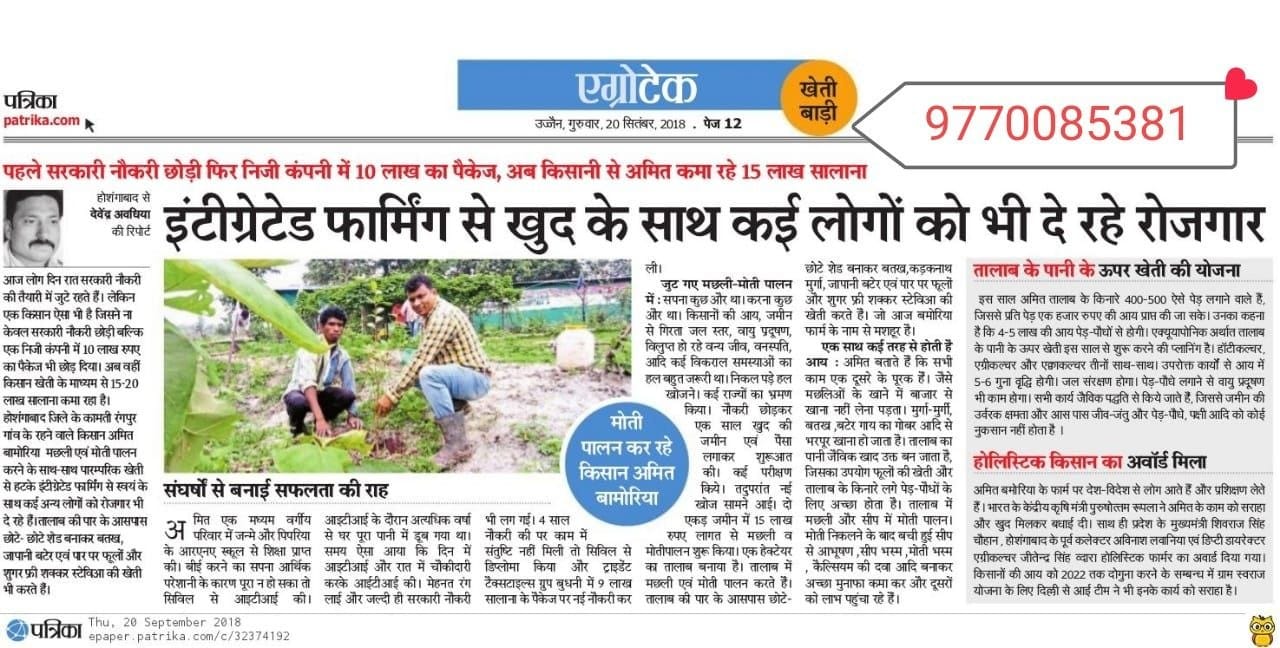
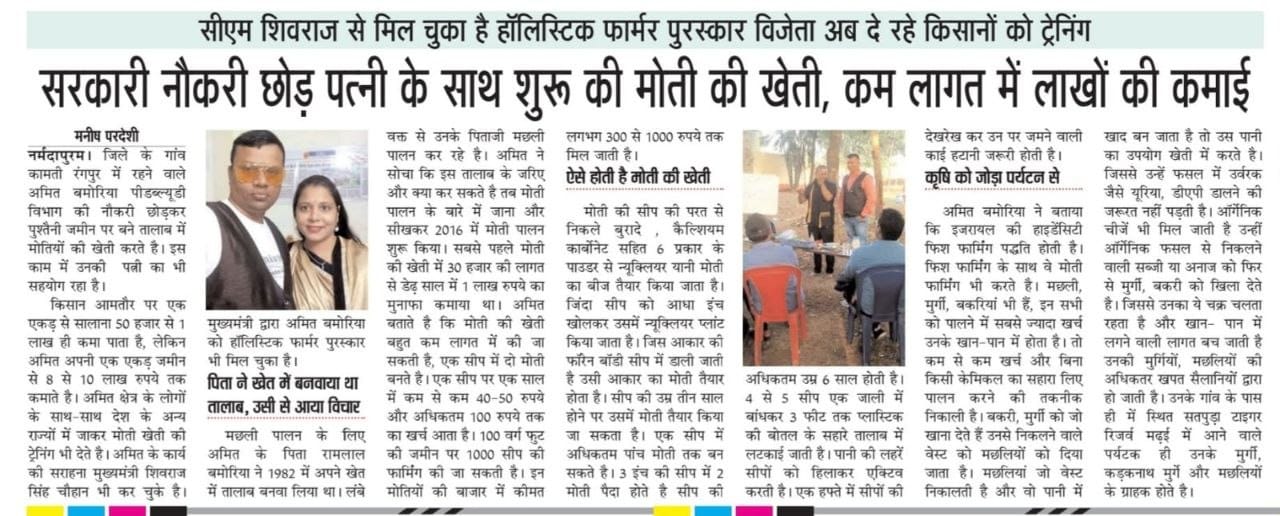
📘 2026 की 5 HiTech Kheti Free Guide
कमरे के अंदर होने वाली 5 आधुनिक खेती और 2026 की 5 हाई प्रॉफिट खेती की पूरी जानकारी प्राप्त करें। लागत, कमाई, आवश्यक जगह और शुरुआत कैसे करें – सब कुछ एक ही गाइड में।
📱 WhatsApp पर फ्री गाइड प्राप्त करें
फ्री गाइड, नई खेती की जानकारी, वीडियो अपडेट, ट्रेनिंग सूचना और विशेष ऑफर सीधे WhatsApp पर प्राप्त करें। अभी जुड़ें और अपडेट सबसे पहले पाएं।
🚀 HiTech Farmer Club Lifetime Membership
Lifetime Training Videos, Premium Guides, Business Planning, Subsidy Updates, Expert Support, Farming Community और कई विशेष लाभ एक ही सदस्यता में प्राप्त करें।
Bonus: HiTech Farmer Club Join करने पर ₹2,500+ मूल्य की Premium Amazon Farming Books FREE प्राप्त करें।
eBooks on Amazon
Bonus: HiTech Farmer Club Join करने पर ₹2,500+ मूल्य की Premium Amazon Farming Books FREE प्राप्त करें।

Bamoriya Pearl Farm
भारत के किसानों को मोती खेती, मशरूम खेती और आधुनिक कृषि तकनीकों के माध्यम से आत्मनिर्भर और सफल कृषि-उद्यमी बनाने का हमारा मिशन है।
📞 9893232938
📧 info@learningadda.com


Created with © systeme.io